


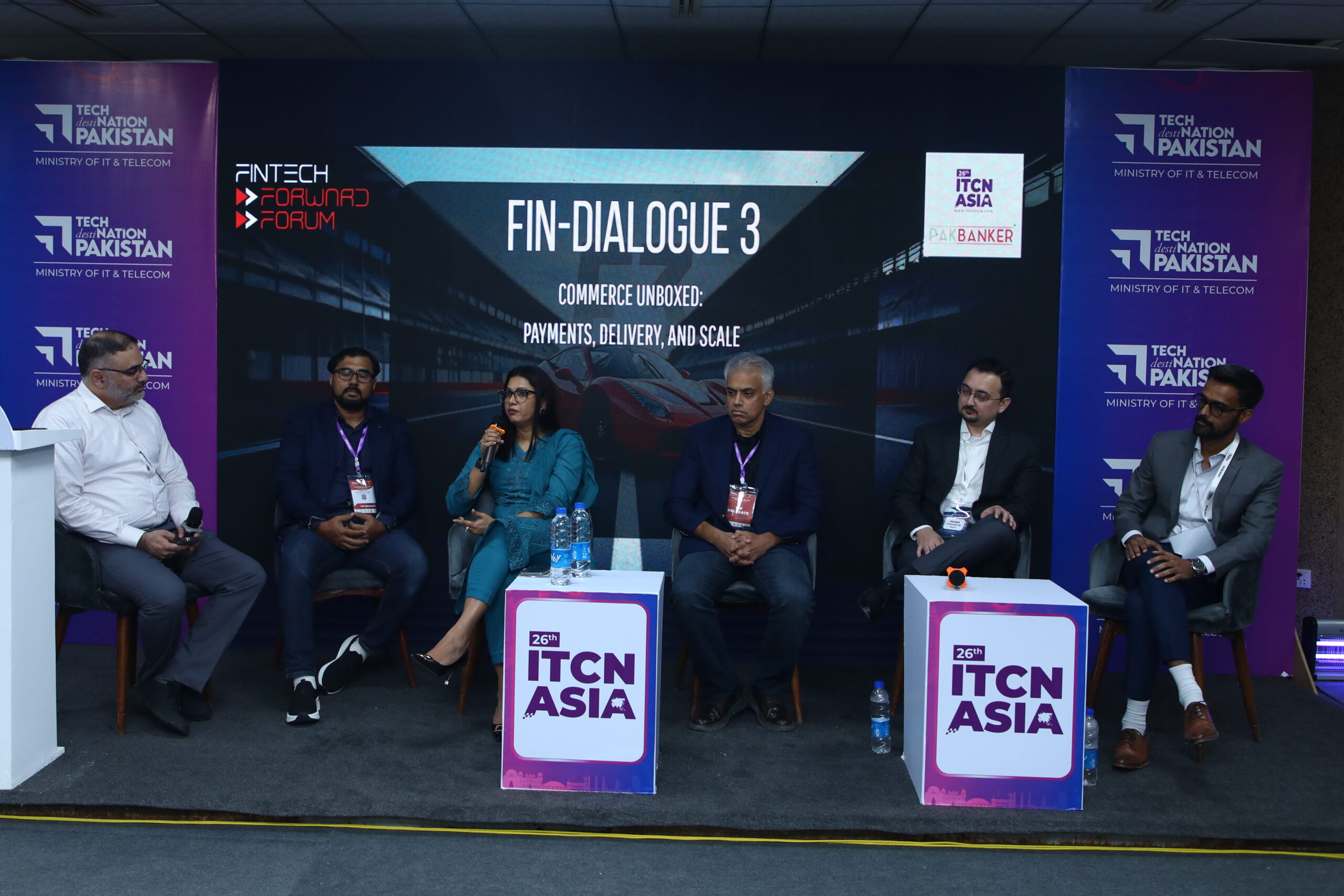
The final FinDialogue of the evening, titled “Commerce Unboxed: Payments, Delivery, and Scale,” served as the high-stakes closing chapter for the Fintech Forward Forum 2025. Following earlier deep dives into regulatory frameworks and the evolution of digital banking, this concluding session shifted the focus toward the physical reality of digital trade. Moderated by Haris Waheed, the panel brought together a cross-section of industry heavyweights, including Nisar Mughal of Swich, Iftikhar Arif from M&P, Mahwish Saad Khan of PayFast, Taimur Ahmad from PayPro, and Hani Haider representing Easypaisa. Together, they dissected the paradox of Pakistan’s digital landscape: an environment where e-commerce volumes and smartphone penetration have reached record highs, yet the “cashless” dream remains anchored by a persistent, systemic reliance on Cash-on-Delivery.
Building the Digital Commerce Engine: Data, Ecosystems, and the Merchant Mandate
At the heart of the discussion was the transformative power of data, which the panelists identified as the primary fuel for a modern commerce engine. Hani Haider highlighted the massive scale currently available to market leaders, noting that Easypaisa’s platform supports over 55 million registered customers through a sophisticated data lake and an AI-driven decisioning layer. This infrastructure allows platforms to move beyond simple transaction recording toward a model of behavioral intelligence. By analyzing spending patterns and demand cycles, these platforms can predict fraud and personalize customer engagement with surgical precision. However, the panel noted that this data advantage is currently stifled by a “manual mismatch.” Because many merchants still rely on offline methods to track inventory and cash flow, the data trail becomes fragmented, preventing the ecosystem from reaching its full predictive potential.
Watch the session video here:
youtube.com/watch?v=2cJ9qBLGd2c&feature=youtu.be
The conversation then pivoted to the complex economics of merchant behavior, which remains a significant bottleneck for digital adoption. Despite a reported 40% growth in digital payments, the panel observed that many merchants still view digital acceptance as a financial or operational burden. This reluctance is driven by the stark contrast between the immediate liquidity of cash and the perceived friction of digital channels. For a small merchant operating on thin margins, settlement delays and the complexity of multi-day refund cycles can disrupt essential business operations. Mahwish Saad Khan and Taimur Ahmad emphasized that merchants are not inherently anti-digital; rather, they are waiting for a system that offers the same predictability and transparency as the cash they hold in their hands. Until digital settlement engines can guarantee speed and ease of reconciliation, the incentive to shift away from COD will remain weak.
A recurring theme throughout the evening was the “Triangle of Dependency,” a concept illustrating the inextricable link between payments, logistics, and merchants. Iftikhar Arif provided a critical perspective on how the physical delivery process dictates digital trust. In Pakistan, the courier is often the only human face of a digital transaction. If a delivery experience is poor, or if a courier refuses to let a customer inspect a package, the customer’s frustration is directed at the digital payment method itself rather than the logistics provider. This asymmetry means that even a flawless payment gateway can be undermined by an unreliable fulfillment layer. The Forum stakeholders argued that for the commerce engine to scale, courier companies must modernize their settlement practices and integrate more deeply with payment providers to eliminate the delays that historically reinforced cash dependency.
The dialogue concluded with an optimistic look at the untapped potential of digital credit and escrow mechanisms. The panelists agreed that the true “goldmine” lies in merchant lending. By transitioning to digital transactions, small businesses can build a “transactional resume” that allows platforms like Swich to assess creditworthiness without traditional financial records. This creates a powerful value proposition: digital adoption becomes a gateway to capital. Furthermore, the revival of escrow models, where funds are held until a delivery is verified, was proposed as the ultimate bridge for consumer trust. By stabilizing the fulfillment process through real-time verification and settlement assurance, the ecosystem can finally dismantle the “fear factor” of prepayments.
As the Forum drew to a close, the final consensus was clear: Pakistan’s path to a cashless future will not be paved by a single sector, but by the collective ability of all players to function as one synchronized digital commerce engine.
Fintech Forward Forum 2025 took place on September 23 in Karachi, hosted by ITCN Asia and programmed by PakBanker.
The future of finance in Pakistan is being written, and this is where the story continues.
Follow the PakBanker Whatsapp Channel for updated across Pakistan’s banking ecosystem.